Choi Youngwook
b.1964
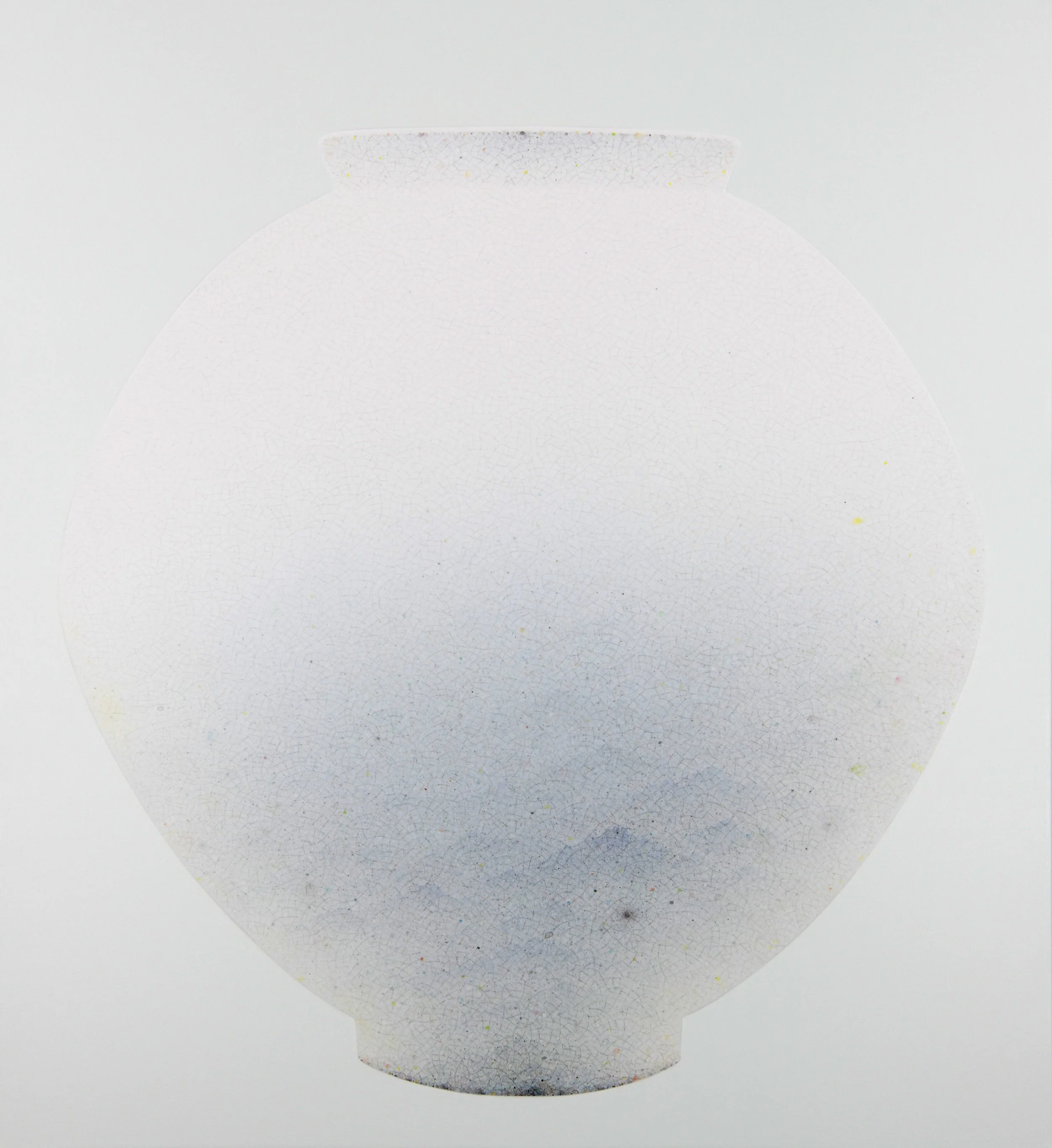
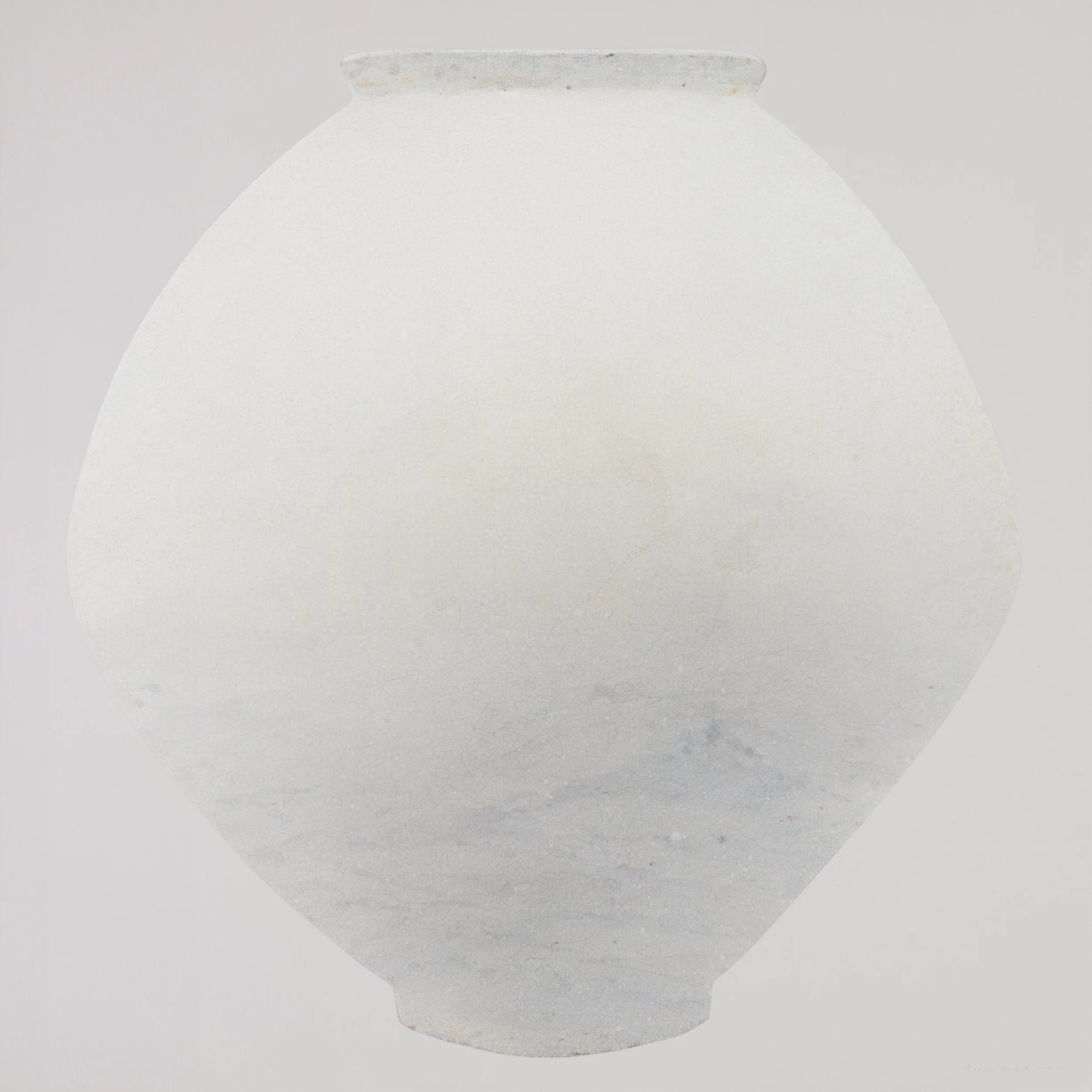
최영욱은 조선 백자 달항아리를 중심으로 재현과 물질성, 기억과 시간의 관계를 탐구해 온 한국 현대미술 작가이다. 1964년 서울에서 태어난 그는 구상회화의 전통적인 재현 방식을 바탕으로, 도자기의 형태와 표면에 대한 지속적인 관찰을 통해 독자적인 회화적 언어를 발전시켜 왔다. 그의 작업은 한국 도자문화의 조형적 유산과 동시대 회화의 물질적·형식적 탐구가 교차하는 지점에 놓인다.
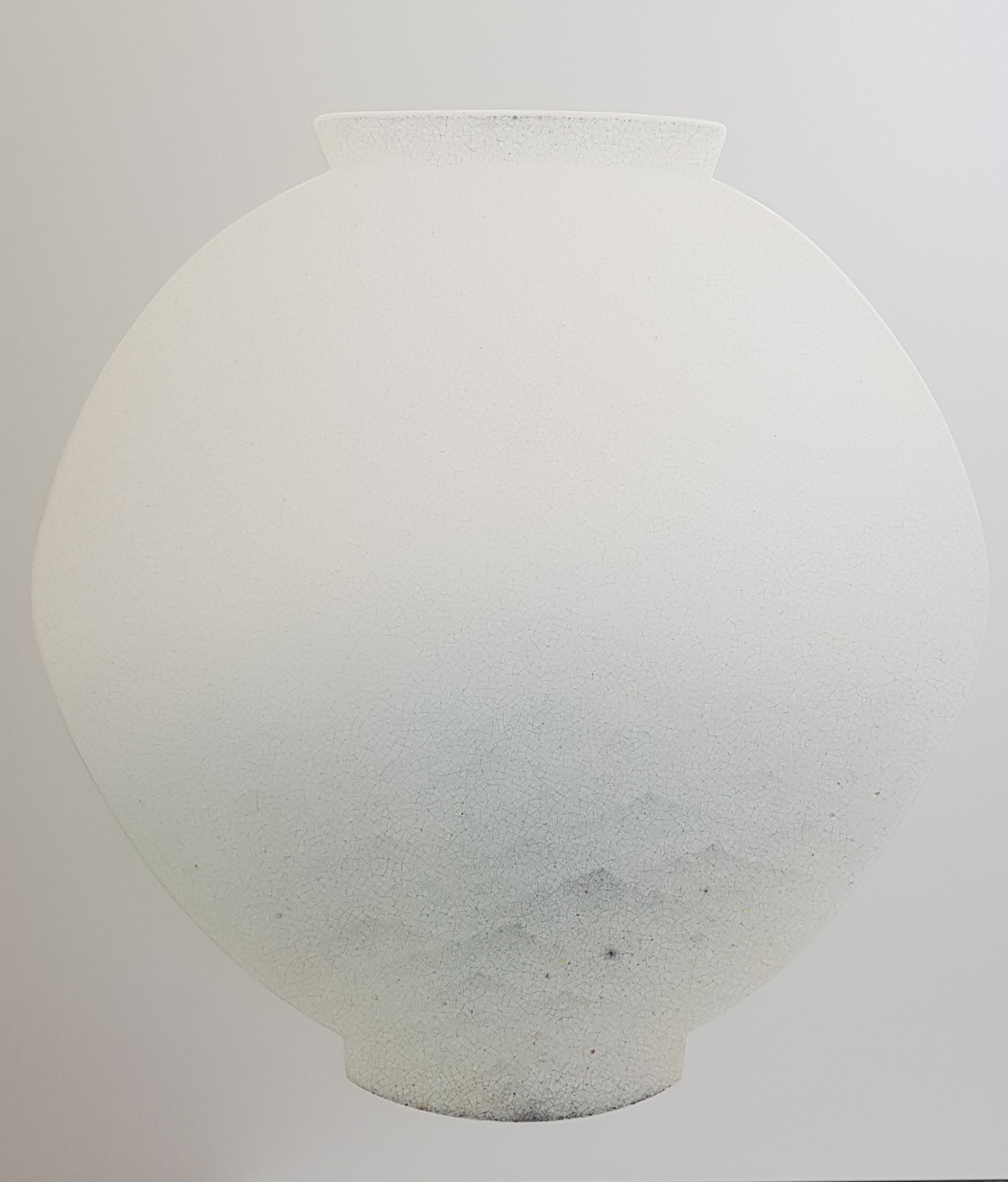
대표 연작 《Karma》는 조선시대 백자 달항아리의 비정형적인 곡선과 균형, 표면의 미세한 균열을 중심으로 전개된다. 화면에 등장하는 달항아리는 정교한 명암과 색채의 조절을 통해 입체적 형상을 드러내는 동시에, 그 표면을 가로지르는 무수한 선의 중첩으로 구성된다. 도자기의 빙렬(氷裂)에서 비롯된 선들은 구체적인 형상의 재현을 넘어 화면 내부의 리듬과 구조를 형성하는 독립적인 조형 요소로 작용한다.
작가는 캔버스 위에 젯소를 반복적으로 쌓고 연마하는 과정을 통해 백자의 치밀하고 매끄러운 표면을 구축한다. 그 위에 세밀하게 그려진 선들은 서로 교차하고 분기하며 복합적인 망상 구조를 형성한다. 이러한 제작 방식에서 물질의 축적과 소거, 선의 반복은 긴밀하게 연결되며, 화면은 도자기의 물리적 특성을 회화의 표면으로 전환하는 과정을 통해 형성된다.
《Karma》 연작에서 반복적으로 등장하는 달항아리의 형상은 작품마다 미세한 비례와 색조, 표면 구조의 차이를 드러낸다. 절제된 화면 구성과 세밀한 필선의 집적은 대상의 정적인 형태와 내부의 복합적인 움직임 사이에 긴장을 형성한다. 이러한 접근은 전통적인 정물화의 재현적 관습을 유지하면서도, 회화의 표면과 선, 물질적 깊이에 대한 탐구로 확장된다.
최영욱의 작업은 조선 백자의 조형적 전통을 동시대 회화의 언어로 재구성하는 지속적인 실천으로 이해할 수 있다. 달항아리라는 일관된 모티프를 중심으로 발전시켜 온 그의 회화는 재현과 추상, 물질과 이미지, 반복과 차이의 관계를 통해 고유한 조형적 질서를 구축해 왔다.
Choi Youngwook is a Korean contemporary artist whose practice explores the relationships between representation and materiality, memory and time through sustained engagement with the Joseon dynasty's white porcelain moon jar. Born in Seoul in 1964, he has developed a distinct pictorial language grounded in the traditions of representational painting and a continuous examination of ceramic form and surface. His work occupies a space between the formal legacy of Korean ceramic traditions and the material and structural concerns of contemporary painting.
His principal series, Karma, centers on the irregular contours, subtle proportions, and intricate surface patterns of Joseon white porcelain moon jars. Through meticulous modulation of light and color, the vessels acquire an illusionistic three-dimensional presence, while their surfaces are articulated by an extensive network of fine, intersecting lines. Derived from the crackle patterns associated with ceramic glazes, these lines extend beyond descriptive representation to function as independent structural elements within the pictorial field.
Choi constructs his surfaces through repeated applications and abrasion of gesso, developing a dense, polished ground that recalls the smooth material qualities of porcelain. Upon this surface, finely rendered lines intersect, diverge, and accumulate into intricate networks. The processes of layering and removal, together with the repetition of linear gestures, become integral to the formation of the painting, translating the physical characteristics of ceramics into the material language of the canvas.
Although the moon jar remains a recurring motif throughout the Karma series, each composition reveals subtle variations in proportion, tonality, and surface structure. Restrained compositions and densely articulated linear patterns establish a tension between the apparent stillness of the vessel and the complexity of its pictorial construction. In this way, Choi's paintings retain the representational conventions of still life while extending their inquiry into the relationships between surface, line, and material depth.
Choi's practice may be understood as a sustained reconsideration of the formal traditions of Joseon white porcelain within the language of contemporary painting. Through a consistent engagement with the moon jar, his work has developed a distinctive pictorial structure informed by the relationships between representation and abstraction, material and image, repetition and difference.
Selected works