Lee Jinwoo
b.1959

이진우는 한지와 숯을 중심으로 물질의 축적과 소멸, 반복적인 행위와 시간의 관계를 탐구해 온 한국 현대미술 작가이다. 1959년 서울에서 태어나 세종대학교에서 미술을 공부했으며, 이후 프랑스로 건너가 파리 제8대학교와 파리 국립고등미술학교에서 수학했다. 프랑스를 기반으로 활동해 온 그는 한국의 전통적인 재료와 서구 현대미술의 조형적 맥락이 교차하는 지점에서 독자적인 작업 세계를 구축해 왔다.
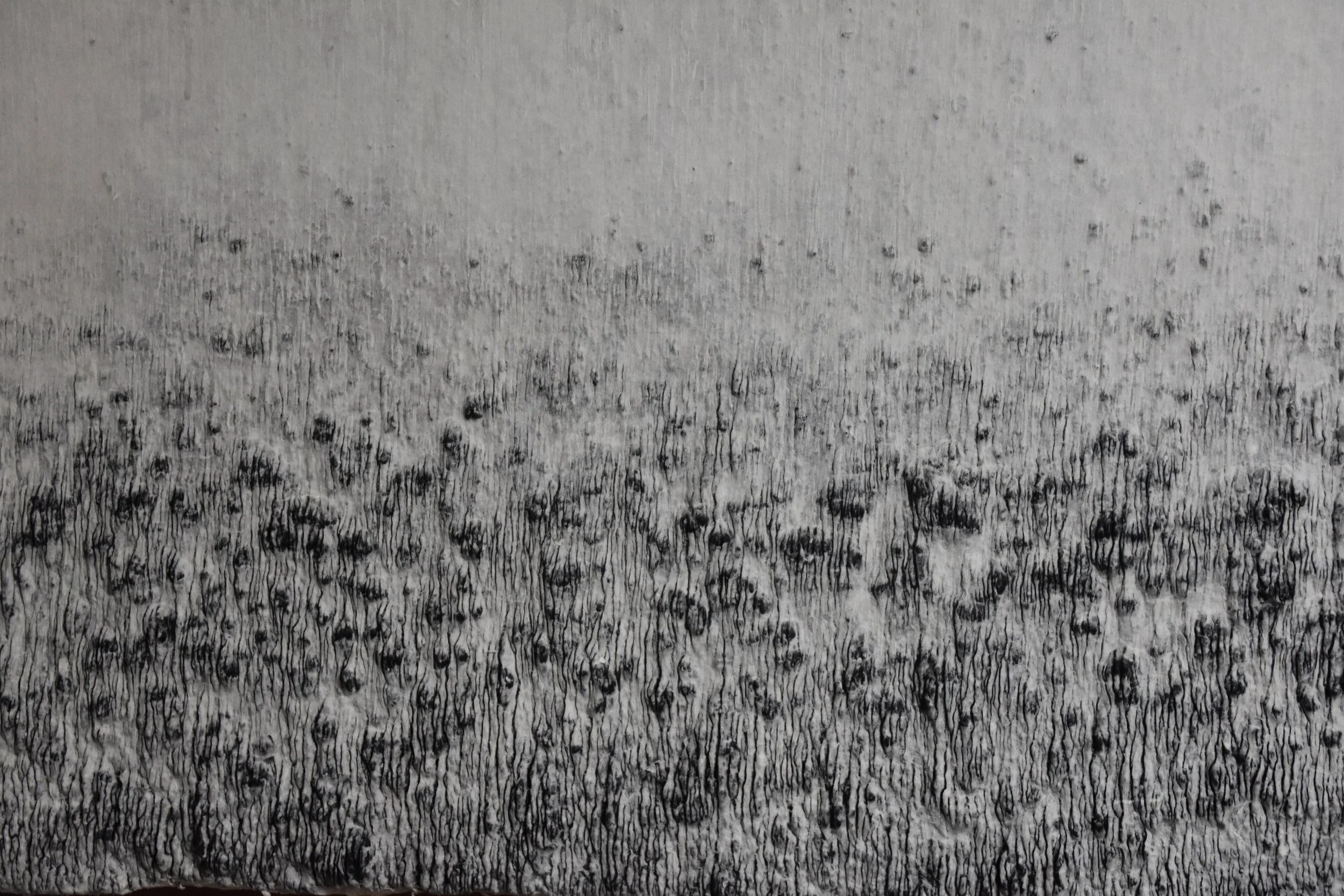
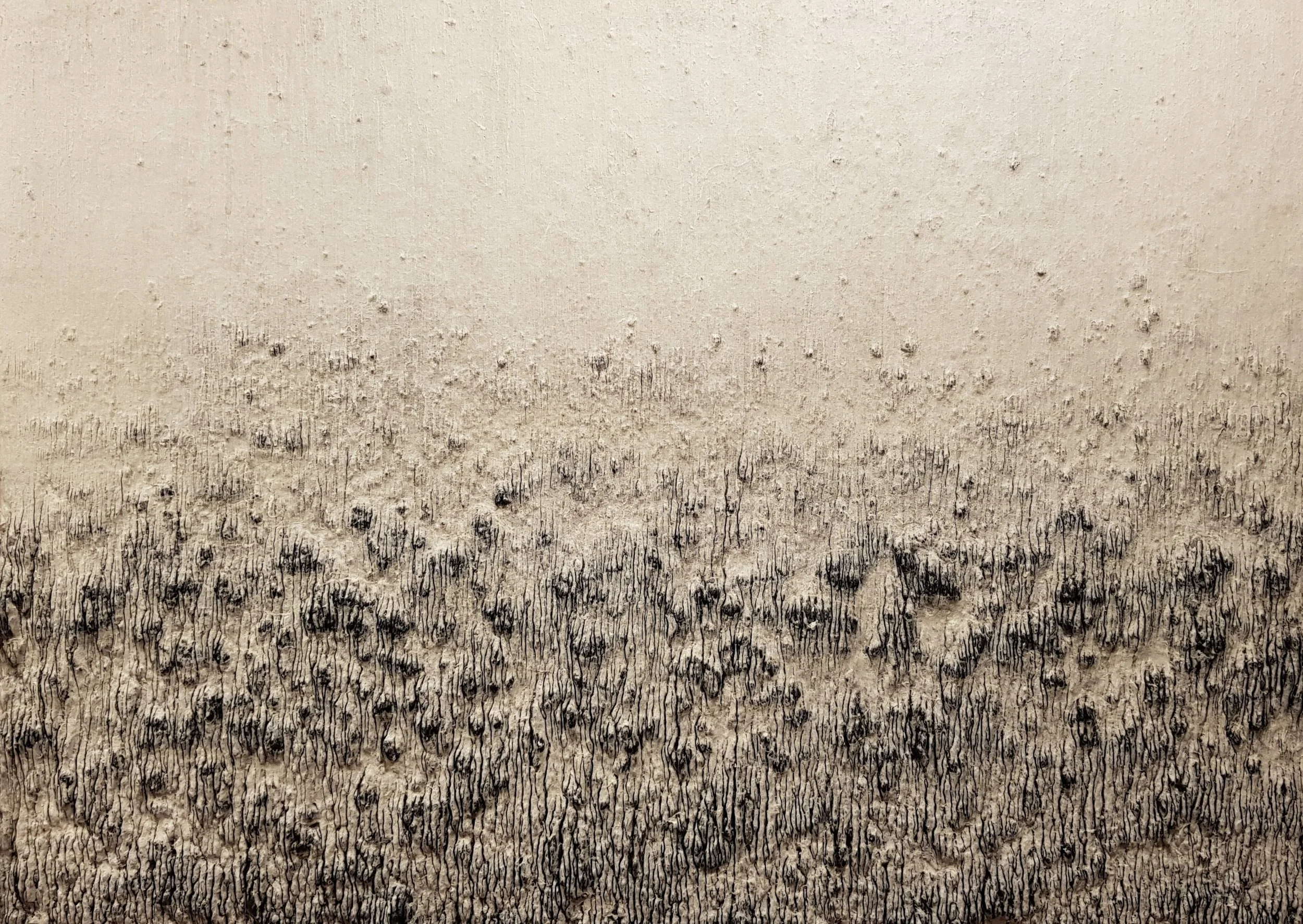
그의 작업은 한지와 숯이라는 상이한 물성을 지닌 재료를 반복적으로 중첩하고 마모시키는 과정에서 형성된다. 숯을 쌓고 그 위에 한지를 덮은 뒤 금속 솔로 두드리고 긁어내는 행위는 표면을 구축하는 동시에 해체하는 양가적인 성격을 지닌다. 오랜 시간에 걸쳐 축적된 물질의 층위는 회화의 평면성을 넘어 부조적 깊이를 형성하며, 화면은 제작의 과정과 시간이 응축된 물질적 구조로 전환된다.
이러한 작업 방식은 1970년대 한국 단색화에서 나타난 반복적 행위와 재료에 대한 탐구의 연장선에서 논의될 수 있다. 그러나 이진우의 작업은 단색화의 형식적 특성을 계승하는 데 머무르지 않는다. 한지의 섬유질과 숯의 입자가 충돌하고 결합하는 과정에서 생성되는 불균질한 표면은 물질 자체의 저항과 우연성을 드러내며, 회화와 조각의 경계를 가로지르는 독자적인 조형적 특성을 형성한다.
이진우의 작업에서 반복은 단순한 제작상의 절차를 넘어 작품의 구조를 결정하는 핵심적인 조건으로 작용한다. 축적과 침식, 밀도와 투과성이 공존하는 화면은 물질에 가해진 행위의 흔적을 간직하면서도 그 과정의 상당 부분을 내부로 흡수한다. 이러한 물질적 긴장과 시간의 중층성은 그의 작업 전반을 관통하는 일관된 조형적 언어를 이룬다.
한국과 프랑스를 오가며 발전시켜 온 이진우의 예술은 단색화 이후 한국 추상회화의 확장된 흐름 속에서 고유한 위치를 점한다. 물질과 신체, 행위와 시간의 관계를 지속적으로 다루어 온 그의 실천은 회화의 물리적 조건과 조형적 가능성에 대한 탐구로 이어지고 있다.
Lee Jinwoo is a Korean contemporary artist whose practice explores the material processes of accumulation and erosion, and the relationship between repetitive gestures and the passage of time. Born in Seoul in 1959, he has developed a distinct artistic practice between Korea and France, investigating the material conditions and formal possibilities of painting.
Working primarily with hanji (traditional Korean paper) and charcoal, Lee constructs his surfaces through a prolonged process of layering, compression, and abrasion. His method involves accumulating charcoal, covering it with layers of hanji, and repeatedly striking and scraping the surface with a metal brush. This process of simultaneous construction and erosion produces densely textured surfaces that extend beyond the conventional flatness of painting, acquiring a relief-like depth. The resulting works embody the physical duration of their making, with successive interventions embedded within the material structure.
Lee's practice may be considered in relation to the material investigations and repetitive gestures associated with Korean Dansaekhwa of the 1970s. Yet his work extends beyond the formal concerns of this movement. The interaction between the fibrous texture of hanji and the granular properties of charcoal generates irregular, deeply layered surfaces in which material resistance and contingency become integral to the work. These qualities establish a distinct visual language that moves between painting and sculpture.
Repetition in Lee's work operates not merely as a method of production but as a fundamental condition of its material and formal organization. Accumulation and erosion, density and permeability coexist within surfaces that preserve traces of physical intervention while absorbing much of the process through which they were formed. This interplay between material tension and temporal layering remains central to his artistic practice.
Developed between Korea and France, Lee's work occupies a distinctive position within the expanded trajectory of Korean abstract painting following Dansaekhwa. His sustained engagement with material, bodily gesture, and time continues to investigate the physical conditions and possibilities of painting.
Selected works


Selected Works
-

untitled
mixed media with hanji on linen, 53×65.1cm, 2021
-
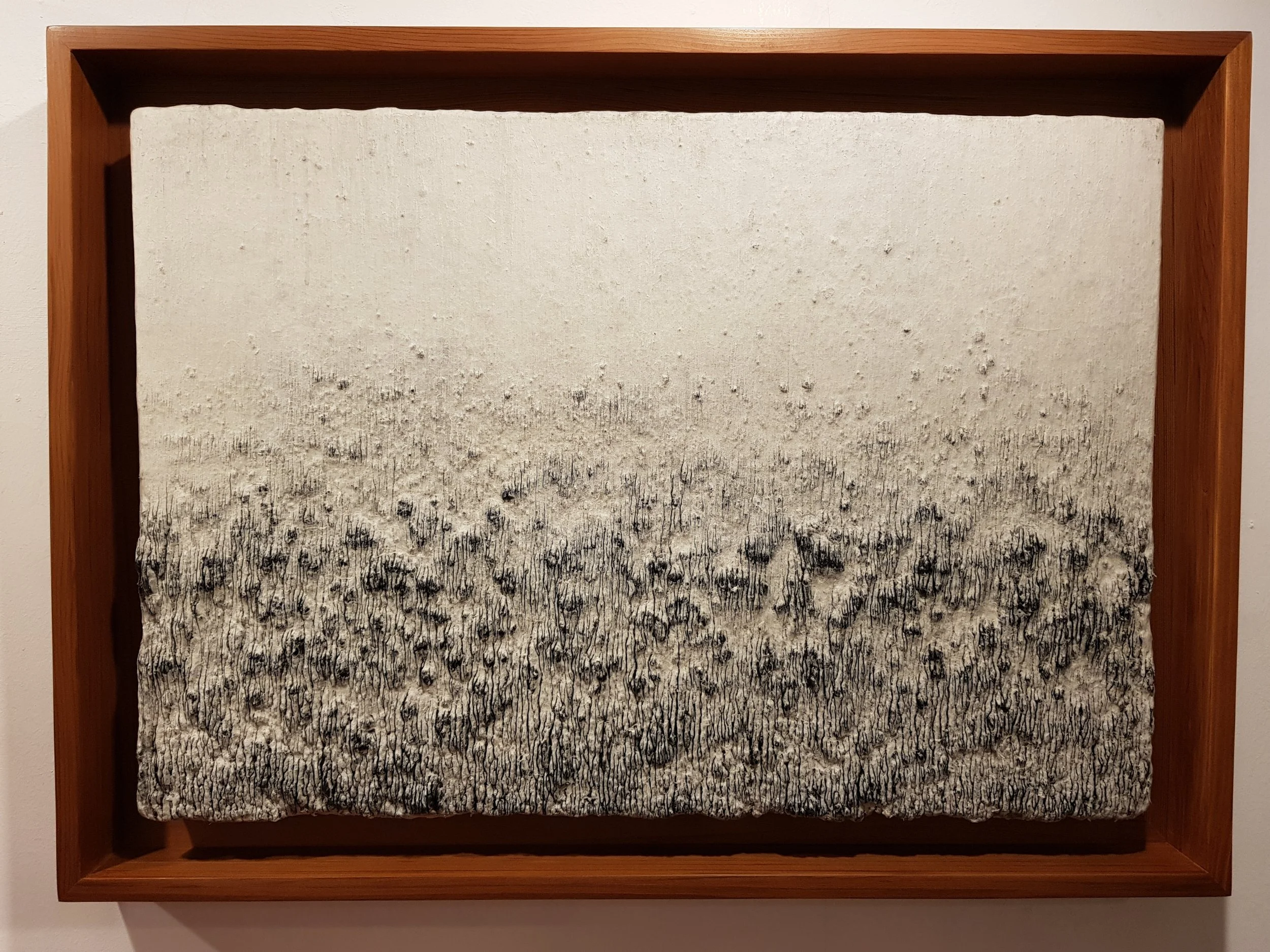
untitled
mixed media on canvas, 74x54cm, 2017
-

untitled
mixed media with hanji on linen, 108x163cm 2021
-

untitled
mixed media with hanji on linen, 98x149cm, 2011