Kim Taeho
b.1948 ~ 2022

김태호는 한국 전후 추상미술과 단색화의 전개 속에서 회화의 물질성과 구조, 반복적 행위의 관계를 지속적으로 탐구해 온 작가이다. 1948년 부산에서 태어난 그는 1970년대부터 한국 현대미술의 실험적 흐름에 참여했으며, 회화의 표면과 공간, 색채의 축적과 소거를 중심으로 독자적인 조형 언어를 구축해 왔다.
1970년대 후반부터 전개된 《형상(Form)》 연작에서는 기하학적 구조와 환영적 공간 속에 형상의 흔적을 배치하며 추상과 재현 사이의 관계를 탐색했다. 이후 종이를 활용한 작업과 화면의 구조에 대한 실험을 거쳐, 1990년대 중반부터 《내재율(Internal Rhythm)》 연작을 본격적으로 발전시켰다. 이러한 전환은 회화의 외형적 구성에서 물질의 내부 구조와 제작 과정 자체로 관심이 확장되는 계기가 되었다.
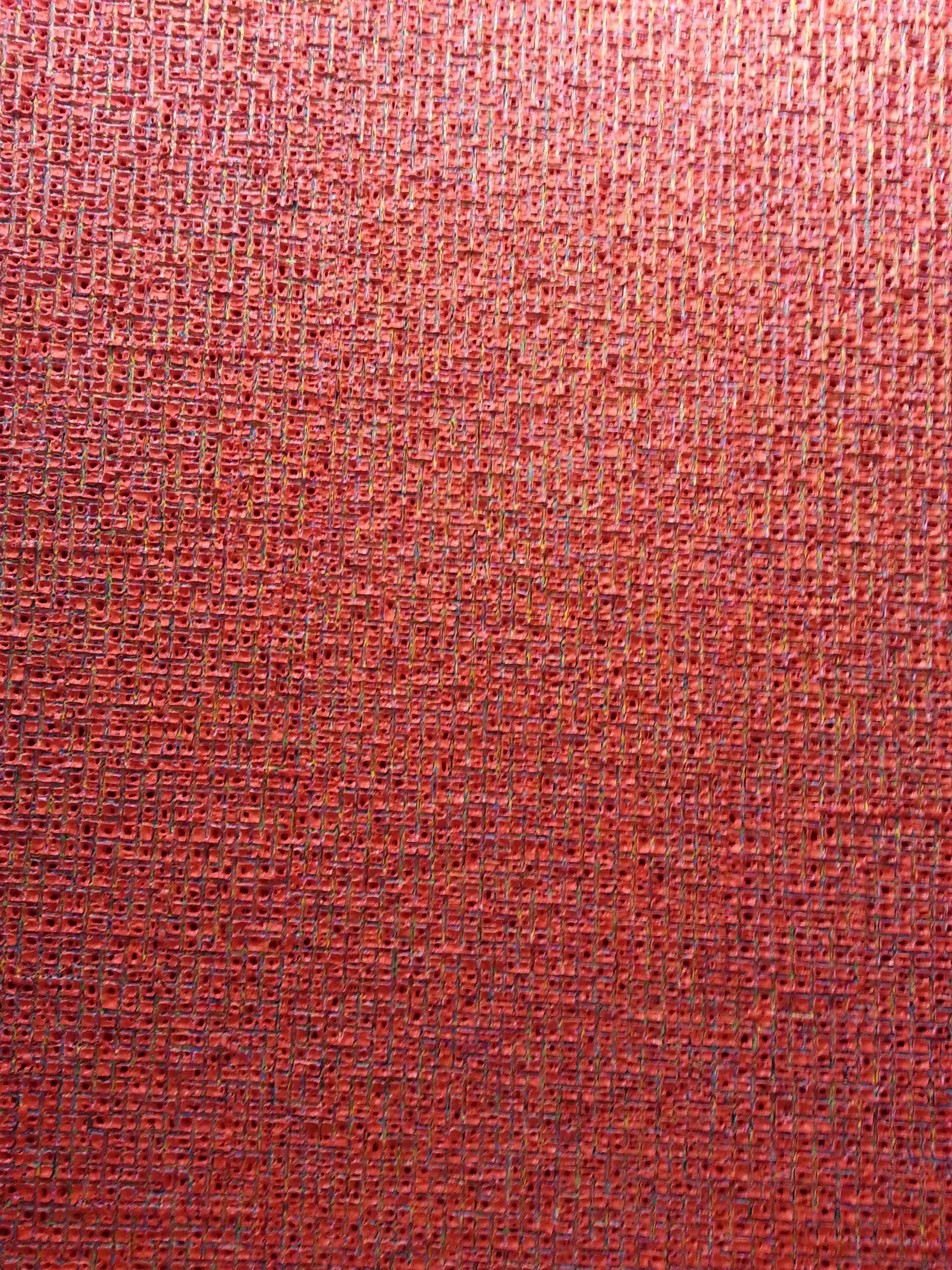
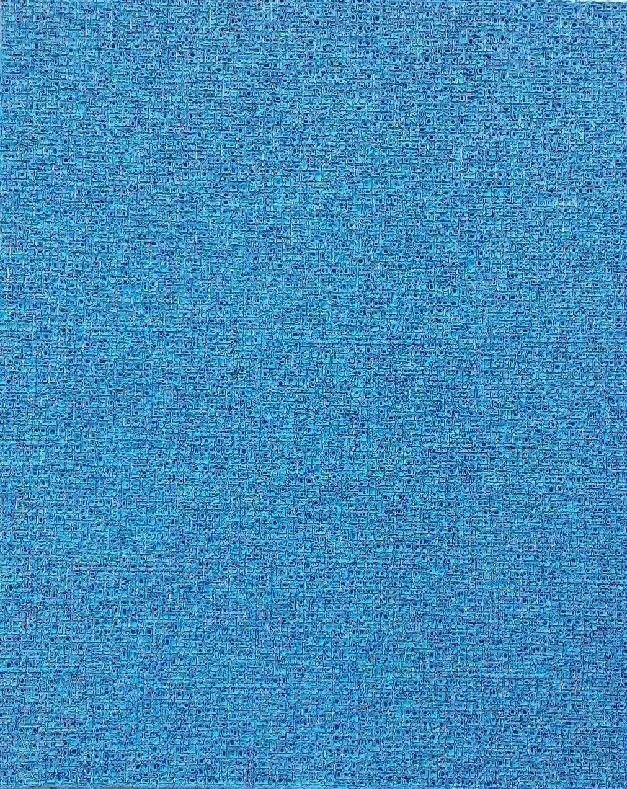
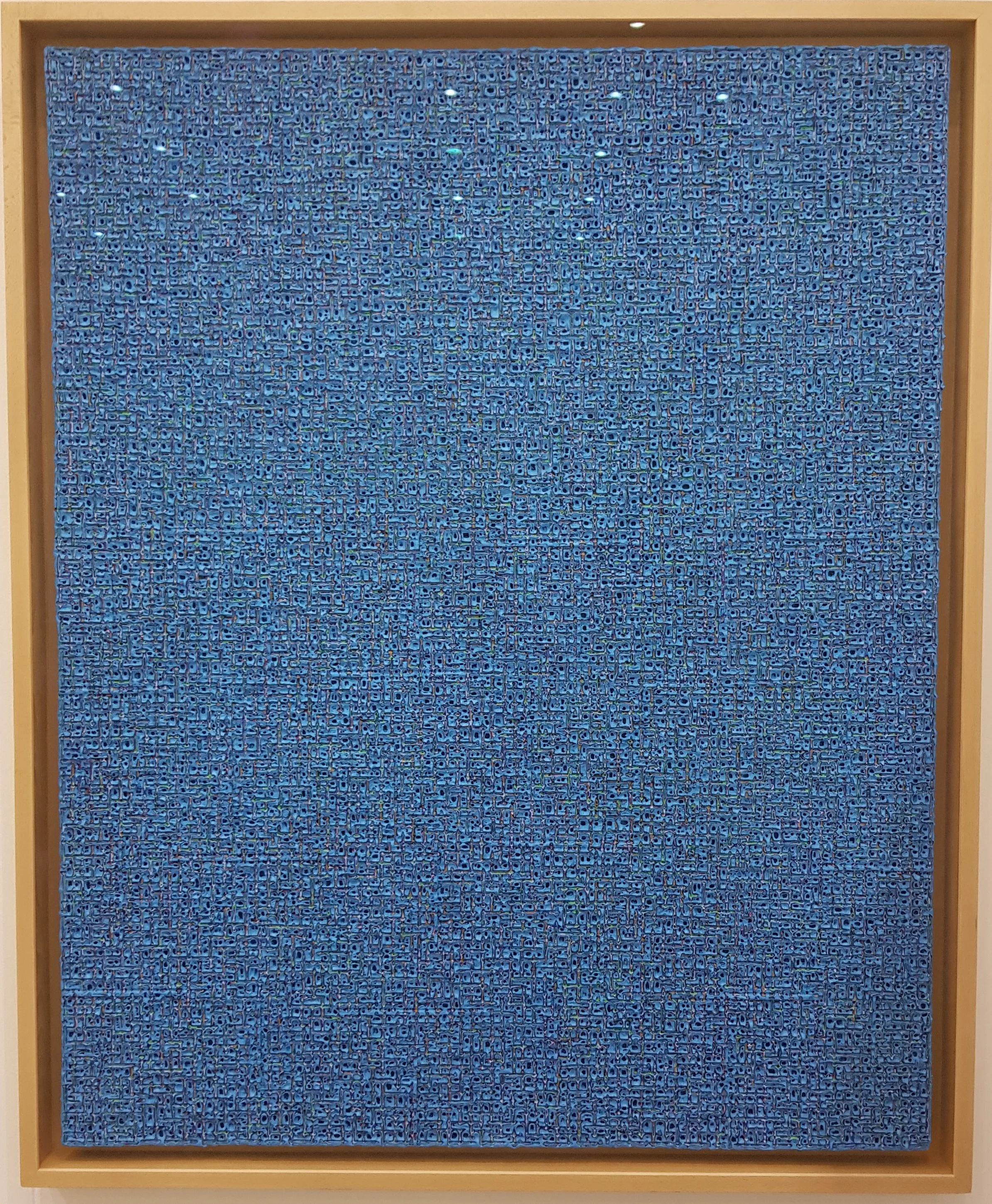
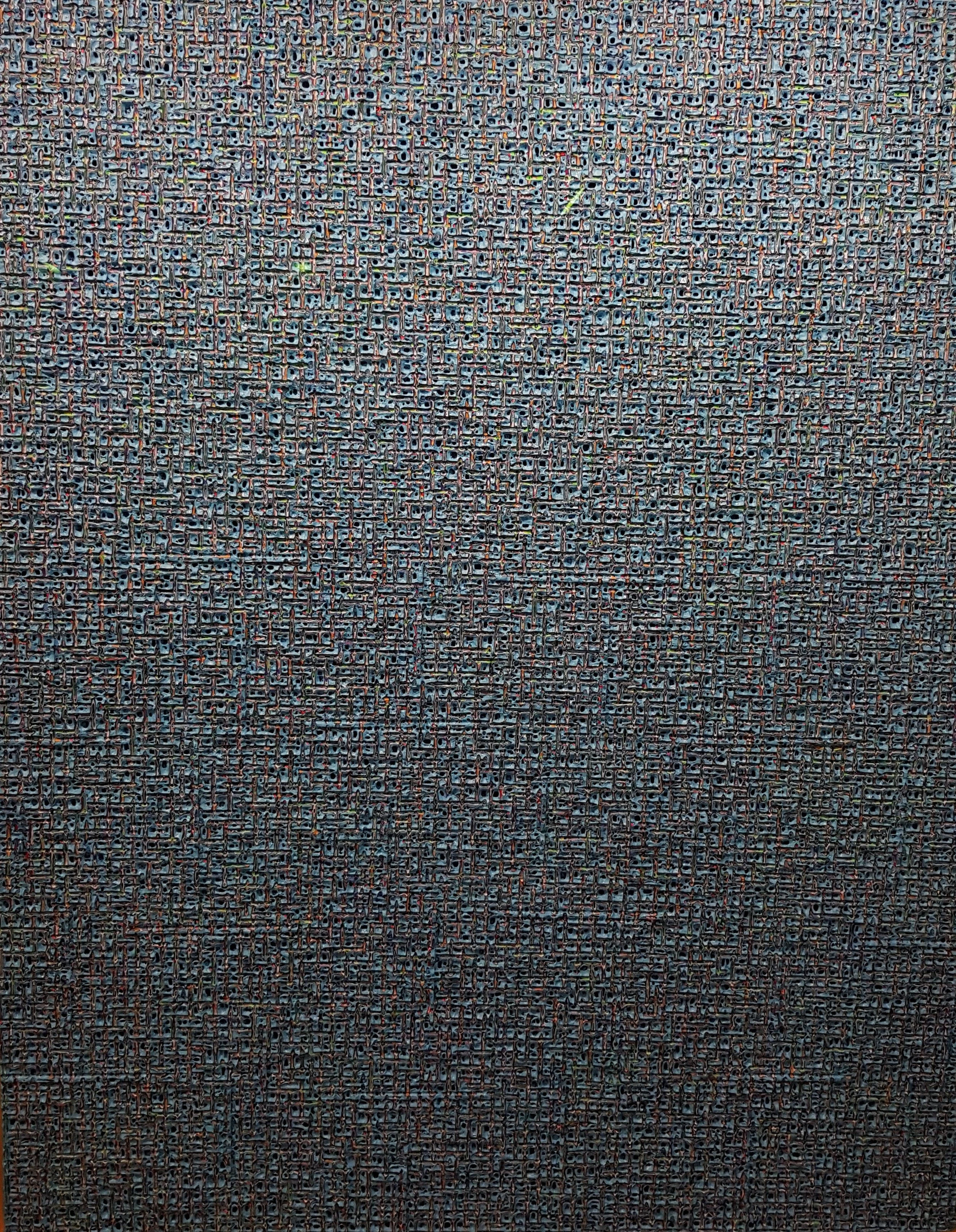
《내재율》은 캔버스 위에 수평과 수직의 격자를 설정하고, 서로 다른 색채의 아크릴 물감을 수십 차례 중첩한 뒤 그 표면을 깎아내는 과정으로 형성된다. 반복적인 축적과 절삭을 통해 드러나는 미세한 색채의 단면은 화면에 조밀한 격자 구조를 형성하며, 표면 아래에 내재되어 있던 물질의 층위를 가시화한다. 이러한 제작 방식은 회화의 평면적 조건을 유지하면서도 부조적인 깊이와 물리적 밀도를 발생시킨다.
멀리서 하나의 색면으로 인식되는 화면은 가까운 거리에서 서로 다른 색채와 미세한 공간들이 교차하는 복합적인 구조를 드러낸다. 격자의 반복과 그 내부에서 발생하는 불균질한 변화는 질서와 우연성 사이의 긴장을 형성하며, 색채는 표면에 부여된 시각적 요소를 넘어 물질의 축적과 절삭을 통해 생성되는 구조적 조건으로 작용한다.
김태호의 작업은 한국 단색화의 반복성과 수행적 제작 방식에 기반을 두면서도, 다층적인 색채와 조각적 표면을 통해 독자적인 방향으로 전개되었다. 《내재율》을 중심으로 지속된 그의 실천은 회화의 표면과 내부, 평면과 입체, 축적과 소거의 관계를 재구성하며 한국 추상회화의 조형적 영역을 확장했다.
Kim Taeho was a Korean artist whose practice explored the relationships between materiality, pictorial structure, and repetitive action within the development of postwar Korean abstraction and Dansaekhwa. Born in Busan in 1948, he emerged within the experimental currents of Korean contemporary art during the 1970s, developing a distinct artistic language centered on the construction of the pictorial surface, spatial organization, and the processes of chromatic accumulation and removal.
Beginning in the late 1970s, his Form series investigated the relationship between abstraction and representation through traces of figuration embedded within geometric structures and illusionistic spaces. Following experiments with paper and the structural organization of the pictorial field, Kim began developing his Internal Rhythm series in the mid-1990s. This transition marked a shift from the external composition of painting toward the internal structure of matter and the physical processes of its making.
The Internal Rhythm series is constructed through a systematic process of establishing horizontal and vertical grids on canvas, applying numerous layers of differently colored acrylic paint, and subsequently carving into the accumulated surface. The exposed cross-sections of pigment form densely articulated cellular structures, revealing chromatic strata previously concealed beneath the surface. Through this method of accumulation and excavation, the paintings retain their two-dimensional support while acquiring a pronounced relief-like depth and physical density.
Viewed from a distance, the compositions often appear as unified monochromatic fields. At closer range, however, their surfaces reveal intricate intersections of color and minute spatial intervals. The repetition of the grid and the irregular variations contained within it establish a tension between order and contingency. Color operates not merely as a visual attribute applied to the surface but as a structural condition emerging through the processes of layering and removal.
While Kim's practice shares the repetitive and process-oriented concerns associated with Korean Dansaekhwa, his sustained engagement with chromatic complexity and sculptural surfaces established a distinct direction within the movement. Developed primarily through the Internal Rhythm series, his work reconfigured the relationships between surface and interior, painting and relief, accumulation and erasure, contributing to the expanded formal possibilities of Korean abstract painting.
Selected works